

At the Spanish News Agency EFE, we remain committed to developing measures aimed at improving environmental conditions, including the implementation of energy-saving and energy-efficiency measures. In response to the requirements of Royal Decree 56/2016 of 12 February, transposing Directive 2012/27/EU of the European Parliament and of the Council of 25 October 2012 on energy efficiency, with regard to energy audits, an analysis of the Spanish News Agency EFE’s national infrastructure was carried out.
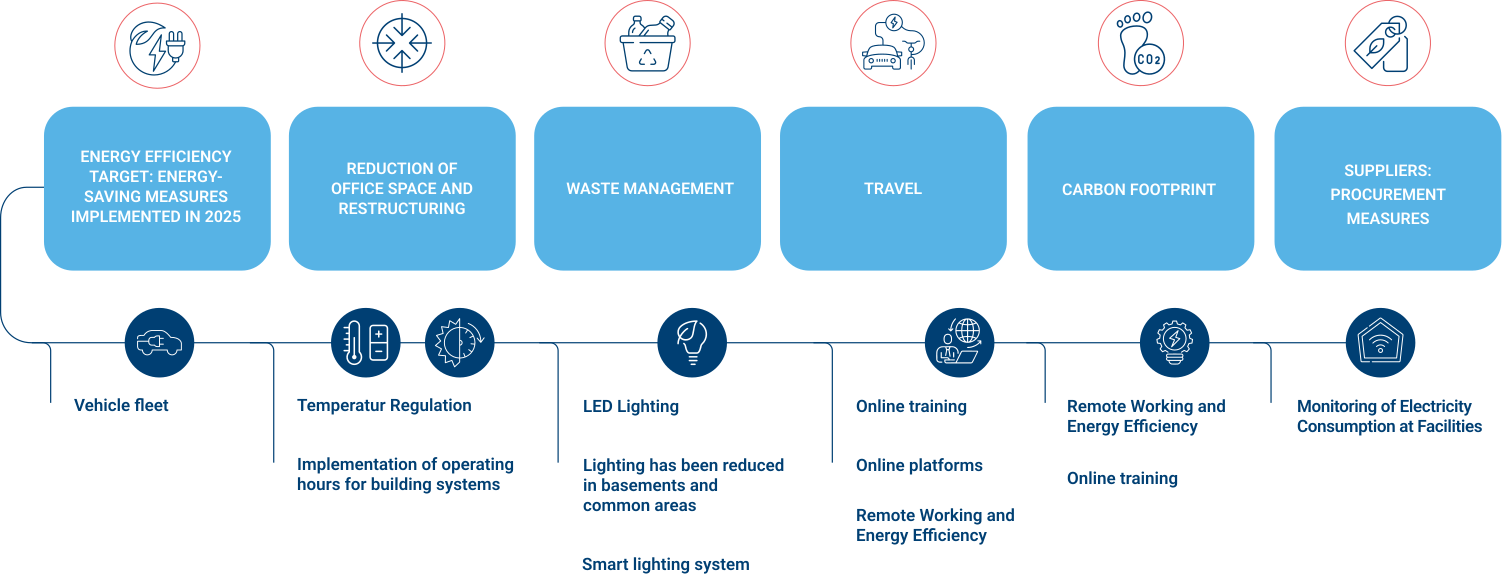
The following measures aimed at promoting energy savings were implemented at our facilities:
At the headquarters, the reduction of occupied space continued, with the development of a space optimisation project to be implemented over the coming years.
A space reduction plan was launched across the national bureaus, with reductions carried out at the Málaga, Vitoria and Barcelona offices. In addition, the space occupied by the Spanish News Agency EFE at its headquarters was reduced
EFE continued to manage its waste in a way that encouraged waste separation and recycling through the installation of specific containers for each type of waste. With regard to waste treatment and disposal, the Agency contracted a specialist company to ensure appropriate environmental protection standards.
The policy of encouraging train travel rather than air travel was maintained, thereby helping to reduce environmental pollution.
During 2025, emissions generated in 2024 at the headquarters and national bureaus were calculated. Greenhouse gas emissions generated during 2024 were audited and verified by AENOR and amounted to 28.66 tCO₂e.
This represented a significant reduction compared with 2023 emissions, which stood at 583.12 tCO₂e, due to the supply of electricity backed by guarantees of renewable origin.
The calculation corresponding to 2025 is currently under way.
During 2025, the electricity supply contract for the headquarters and national bureaus for 2026 and 2027 was put out to tender, with a requirement for guarantees of renewable origin.
Where permitted by the nature of the tender, procurement specifications included provisions designed to give positive consideration to suppliers offering better energy-efficiency credentials, including requirements relating to certifications, the EU Ecolabel, Energy Star and similar standards.
The use of recycled or biodegradable materials, energy efficiency, emissions reduction and waste management, among other measures, was encouraged either as an award criterion, as a minimum requirement included in tender specifications or as a special condition for contract performance.
Se fomentó el uso de materiales reciclados o biodegradables, eficiencia energética, reducción de emisiones, gestión de residuos, etc. Ya fuera como criterio de adjudicación, requisitos mínimos recogidos en los pliegos o como condiciones especiales de ejecución.
In 2025, the use of hybrid vehicles continued to be encouraged and an electric vehicle was added to the fleet, resulting in a further reduction in CO₂ emissions.
To optimize energy consumption, temperatures at the facilities were regulated so that they did not exceed 19°C in winter or fall below 27°C in summer.
Operating hours were established for switching building systems on and off in order to align them with actual periods of use.
The policy of replacing conventional lighting with LED lighting was maintained, resulting in considerable energy savings. Conventional lighting was progressively replaced with LED lighting at the various workplaces, generating significant energy savings.
At the headquarters, Spanish News Agency EFE staff installed 500 dimmable LED light fittings to replace existing lighting on floors 3, 4, 6, 7, 8 and 10.
Lighting in basements and common areas was reduced.
On a daily basis, operating schedules and system settings were adjusted according to building occupancy and weather conditions.
As a complement to the replacement of light fittings, a smart lighting control system was installed. The system takes into account occupancy and natural light levels in order to adjust the amount of artificial lighting required, providing appropriate lighting comfort while reducing energy consumption.
EFE continued to manage its waste in a way that encouraged waste separation and recycling through the installation of specific containers for each type of waste. With regard to waste treatment and disposal, the Agency contracted a specialist company to ensure appropriate environmental protection standards.
The use of various online platforms was encouraged, enabling the storage, processing and management of documents and contributing to a “zero paper” policy.
From 2019 to the present, EFE has continued to implement remote working as a measure aimed at reducing the energy impact associated with commuting to the workplace. This has also enabled a reduction in the amount of building space in use, including the closure of entire floors, and consequently a reduction in energy consumption from lighting, climate control systems and equipment.
From 2019 to the present, EFE has continued to implement remote working as a measure aimed at reducing the energy impact associated with commuting to the workplace. This has also enabled a reduction in the amount of building space in use, including the closure of entire floors, and consequently a reduction in energy consumption from lighting, climate control systems and equipment.
An audit has been conducted to monitor electricity consumption at the main facilities of the Agencia EFE headquarters. To improve energy efficiency, control software has been implemented that will enable the establishment of a consumption baseline.


At the Spanish News Agency EFE, we remain committed to developing measures aimed at improving environmental conditions, including the implementation of energy-saving and energy-efficiency measures. In response to the requirements of Royal Decree 56/2016 of 12 February, transposing Directive 2012/27/EU of the European Parliament and of the Council of 25 October 2012 on energy efficiency, with regard to energy audits, an analysis of the Spanish News Agency EFE’s national infrastructure was carried out.
The following measures aimed at promoting energy savings were implemented at our facilities:
In 2025, the use of hybrid vehicles continued to be encouraged and an electric vehicle was added to the fleet, resulting in a further reduction in CO₂ emissions.
To optimize energy consumption, temperatures at the facilities were regulated so that they did not exceed 19°C in winter or fall below 27°C in summer.
Operating hours were established for switching building systems on and off in order to align them with actual periods of use.
The policy of encouraging train travel rather than air travel was maintained, thereby helping to reduce environmental pollution.
Lighting in basements and common areas was reduced.
On a daily basis, operating schedules and system settings were adjusted according to building occupancy and weather conditions
As a complement to the replacement of light fittings, a smart lighting control system was installed. The system takes into account occupancy and natural light levels in order to adjust the amount of artificial lighting required, providing appropriate lighting comfort while reducing energy consumption.
The Spanish News Agency EFE continued to encourage employees to undertake online training courses, avoiding the need for them to travel from their place of residence to training facilities and thereby reducing transport use and associated emissions.
The use of various online platforms was encouraged, enabling the storage, processing and management of documents and contributing to a “zero paper” policy.
From 2019 to the present, EFE has continued to implement remote working as a measure aimed at reducing the energy impact associated with commuting to the workplace. This has also enabled a reduction in the amount of building space in use, including the closure of entire floors, and consequently a reduction in energy consumption from lighting, climate control systems and equipment.
From 2019 to the present, EFE has continued to implement remote working as a measure aimed at reducing the energy impact associated with commuting to the workplace. This has also enabled a reduction in the amount of building space in use, including the closure of entire floors, and consequently a reduction in energy consumption from lighting, climate control systems and equipment.
The policy of replacing conventional lighting with LED lighting was maintained, resulting in considerable energy savings. Conventional lighting was progressively replaced with LED lighting at the various workplaces, generating significant energy savings.
At the headquarters, Spanish News Agency EFE staff installed 500 dimmable LED light fittings to replace existing lighting on floors 3, 4, 6, 7, 8 and 10.
At the headquarters, the reduction of occupied space continued, with the development of a space optimisation project to be implemented over the coming years.
A space reduction plan was launched across the national bureaus, with reductions carried out at the Málaga, Vitoria and Barcelona offices. In addition, the space occupied by the Spanish News Agency EFE at its headquarters was reduced.
EFE continued to manage its waste in a way that encouraged waste separation and recycling through the installation of specific containers for each type of waste. With regard to waste treatment and disposal, the Agency contracted a specialist company to ensure appropriate environmental protection standards.
The policy of encouraging train travel rather than air travel was maintained, thereby helping to reduce environmental pollution.
During 2025, emissions generated in 2024 at the headquarters and national bureaus were calculated. Greenhouse gas emissions generated during 2024 were audited and verified by AENOR and amounted to 28.66 tCO₂e.
This represented a significant reduction compared with 2023 emissions, which stood at 583.12 tCO₂e, due to the supply of electricity backed by guarantees of renewable origin.
The calculation corresponding to 2025 is currently under way.
During 2025, the electricity supply contract for the headquarters and national bureaus for 2026 and 2027 was put out to tender, with a requirement for guarantees of renewable origin.
Where permitted by the nature of the tender, procurement specifications included provisions designed to give positive consideration to suppliers offering better energy-efficiency credentials, including requirements relating to certifications, the EU Ecolabel, Energy Star and similar standards.
The use of recycled or biodegradable materials, energy efficiency, emissions reduction and waste management, among other measures, was encouraged either as an award criterion, as a minimum requirement included in tender specifications or as a special condition for contract performance.